full
Tom Brady's Team Building Secret (I Used It For 10+ Years)
Most leaders try to build high performance by stacking talent.
But talent alone doesn’t create championships.
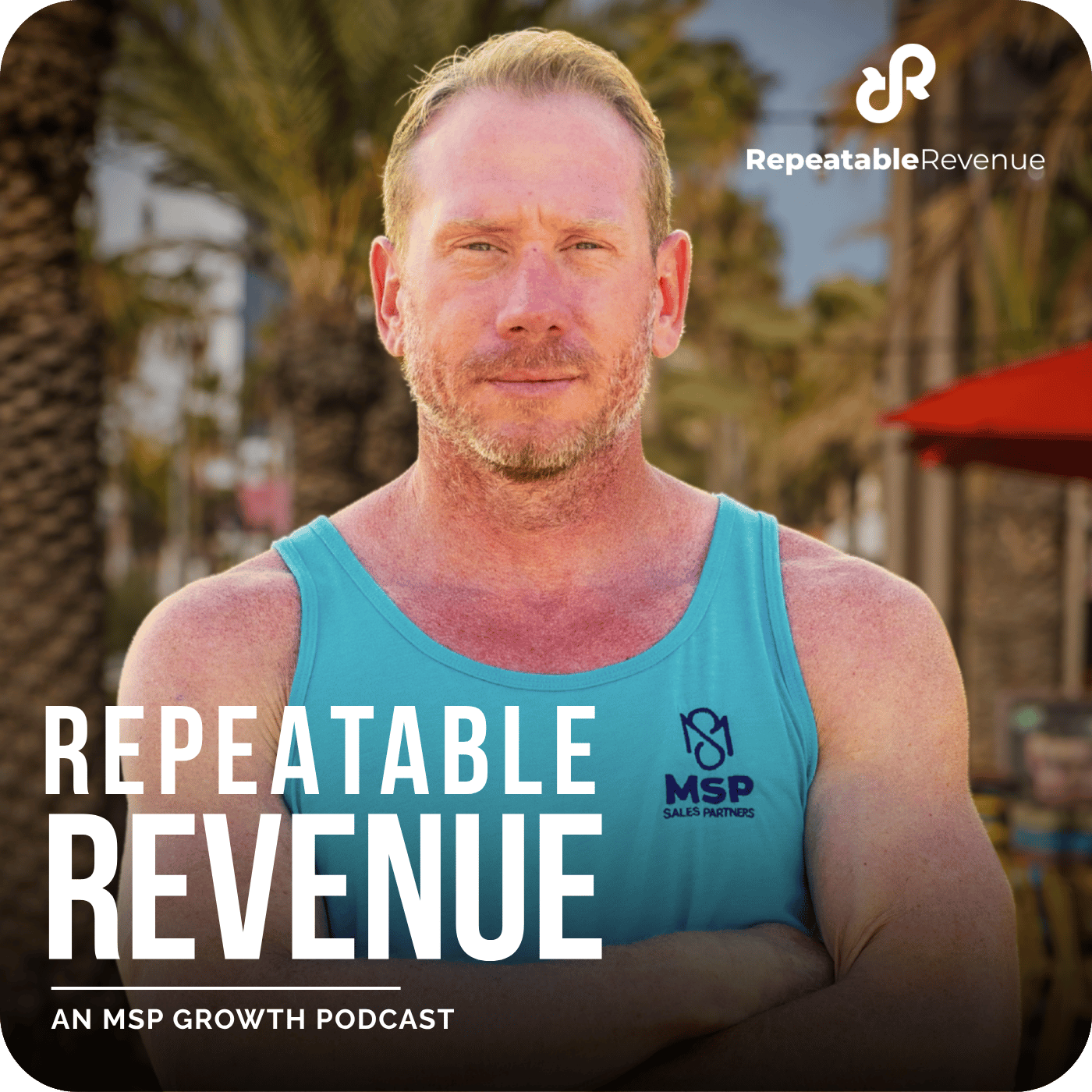
In this episode, Ray breaks down the team-building principle reinforced by Tom Brady — and how he applied the same philosophy for over a decade to transform a cutthroat sales environment into a record-setting team.
If you’re leading high performers who feel disconnected, political, or overly focused on individual wins, this episode will help you think more clearly about what actually drives sustained results.
This is for operators, founders, sales leaders, and executives who care about building environments where performance compounds — not cultures that burn out.
What You’ll Learn in This Episode:
- Why cohesive teams consistently outperform collections of “stars”
- The hidden cost of tolerating prima donnas — even productive ones
- How shared standards and core values directly impact revenue and results
- What “champions do that stars won’t” — and why it matters
- The leadership decision required to shift from individual competition to collective performance
Follow Ray on:
YouTube | LinkedIn | Facebook | Twitter | Instagram
==
This podcast is where Ray thinks through hard decisions — especially when the usual playbooks stop working.
If that approach resonates, that’s what you’ll find more of here.
New to the show? The “Start Here” playlist outlines what the podcast is about and how to approach it: https://player.captivate.fm/collection/a7577a6f-15da-4521-b214-35e4e47f320b
Transcript
I learned this lesson very early in my management career and I've lived and breathed it every day for the past 20 years. And it is that an actual team that works well together will always outperform a group of highly talented individual players that are really just kind of looking out for themselves. And this is true whether you're talking about a football team—and I've got a short quick clip of Tom Brady in a minute—whether you're talking about a football team or you're talking about a sales team.
I mean a group of people who are working together to achieve a common goal. Like they're aligned on what the goal is. They're aligned on what they're doing to get there. They're willing to sacrifice. They're willing to put in the extra effort. They're willing to help each other out. They're willing to share best practices. They're willing to train that new person when they come in the door. They're willing to take some time off and show—or take some time and show—them, "Hey, this is what's working for me." Because I look at you coming in the door, you are now part of my team, we are trying to achieve this goal over here, and the better you are, the better we are, and the more aligned we are. And we're going to increase the likelihood of achieving that collective output, that collective goal, the thing that we are all aligned on trying to hit or trying to win or trying to achieve.
And that's what I mean by team. Versus, you know, you take the top draft pick of, you know, of everybody... like in the business world, stack all the resumes. And then you put those people on one sales floor. And then you put a group of pretty good players on the other sales floor. But this one is going to work together. This one is going to give the extra effort. This one is going to help each other out. This one was always going to win. No matter how talented this side of it is.
And there's going to be people that hear this and they're like, "You can't do that with a sales team. I mean, the sales people are just like... they're too selfish, they're too focused on their goals, they're too focused on their paycheck, they're too focused on their commission, and, you know, they're never going to take some time and help the other players. They're never going to share their secrets. They're never going to give them the scripts. Like they're never going to actually help them because they've never experienced it." Or they see it with like an executive team. Like you stack the deck with all these C-level people or VPs or whatever it is, and, you know, they're all looking out for themselves. And so trying to get them to collaborate and work together to achieve a specific outcome... like, nah, you can't do that shit. Like it can't happen. This isn't football, right? Like they're not going to put on the same jersey; they're looking out for themselves.
The thing is, if you know, then you know that that's bullshit. Like if you have ever operated on a team, in a team dynamic with a healthy, collaborative, and competitive, and driven, ambitious culture, and you've worked alongside people that are willing to help you out, or you've been the star... you've been the person that came in and you were leading the pack and you were willing to give to other people and you saw that get reciprocated and you saw how that impacted the team as a whole and the impact that it had not just on the business and top/bottom line, all that shit, but the actual energy and the actual environment that you're working in... and you've gotten to experience that... If you've seen that, if you've experienced it, you can't unsee it. You know. And then you never want to operate a different way.
I said I learned this really early in my career. It's because my first sales management job, I came in and I had a lot of autonomy given the organizational change and a bunch of stuff happening, so I had a lot of autonomy. And I said, "You know what? We're going to do this differently." I had been selling in the environment. And I didn't love it. It was very cutthroat. The dynamics... it was negative. It was... the morale wasn't great. People wouldn't share shit with you. Like if something was working, they're like, "Yeah I'm gonna hoard this. I'm not gonna show this to anybody."
My first sales management job, I got promoted into... I had been selling with the people I was now managing. And I had a lot of autonomy because of organizational changes. But I had the freedom and the flexibility to make some significant changes. And I just had made a decision: I'm gonna rebuild this team. I'd been selling there and I didn't love it. Right? It was very cutthroat. It was competitive in the not the healthy sense. Like it wasn't like we were all healthily competing to achieve the goal. It was like... they'd steal your shit. Like if they had something that was working, they're not gonna tell you, right? Like they're gonna keep secrets. And morale was bad. The energy of it just wasn't good.
And so when I came in I was like: I'm gonna make a bet. If I make this a place that people want to work at and people want to work together, we could probably do a lot better. So we fired half the team. We installed core values. We managed to those core values. We hired and fired according to those core values. I mean we made some other changes on comp... we made changes to minimum standards... we changed... there was a lot around that. But ultimately it was the culture. It was the environment. It was the people. And there was a very clear expectation that if you are not here to help us collectively achieve this goal, then get the fuck out. Like I don't have time for people that are stabbing each other in the back. I don't have time for gossip. I don't have time... No. Like we are... if we may have problems, but we're going to solve them together. We are going to address them together. We are going to operate like a fucking team. And we are going to help each other out. And if I hear about anybody that's not willing to help the new person or not willing to listen to a call and offer some feedback or not willing to have somebody sit with them and shadow them and hear what's going on... like any of that shit... done. Like I had zero tolerance for it.
And it changed everything for me. It changed the trajectory of my career because once I experienced the real outcome of that... And it was better than I could have imagined. Like it wasn't this visionary that knew exactly what it was going to be, but it was a bet. And I was younger and I was like, "I think that this is better." And it became something better than I could have imagined.
As a sales team... so imagine highly competitive, highly driven, highly talented—by the way, I mean these are good people, but did they necessarily... were they the number one draft pick? Probably not. We were a championship team. We had been... the organization I was at had been in decline in small business membership... was at the U.S. Chamber of Commerce... had been in decline of small business membership for a decade. When we came in and we made the changes, we led the first increase in small business membership in a very long time. And then we went on to hit the number that got harder every year—because they'd be like, "Hey, well shit, if you can do that..." right? Like you know the drill if you've been there—for 10 years in a row.
We held those core values. We made very, very few changes. And when we did, we did it as a team. I experienced this, right? And so this is... I know that there's a lot of people that are like "you can't do that." Well, if you know, you know.
And that's why when I caught this clip from Tom Brady, it was... it was really impactful because few people in my mind love 'em or hate 'em... few people in my mind are more equipped to speak on a championship team and what it takes to build a championship team or what it takes to be part of a championship team or even be the leader on a championship team. Let me drop the clip here real quick.
[Clip of Tom Brady] "We're drafting people before we're drafting players. Which means they're thinking about the intangible traits of these players more so than just the skill set. And I think that's... I'm a big believer in that. I won Super Bowls with a lot of sixth-round picks, a lot of undrafted free agents that worked hard, they put the team first, they were committed to one another, they were committed to try to do the right thing on every play. They showed up every day with a good attitude to be successful. They weren't selfish. You know, you had receivers that were going to go in and crack safeties. You had running backs that were going to step up in pass protection and take on blitzing linebackers. You know, you were going to have a quarterback that could stand in the pocket and take a hit when someone's bearing down on their facemask. You know you had defensive linemen that were taking up two offensive linemen so a linebacker could scrape over the top and make a tackle. So, that is team football. And those are good processes for winning and for championship level type of commitment. And you don't get that all the time in the NFL. I think the challenge in these... in this day is we're getting a lot of athletes that are very concerned about individual success. Very concerned about their individual statistics. And it's fine, you'll probably make a lot of money that way, but I don't think you're going to be a champion in the same way. Because champions do what the stars aren't always willing to do. And I would prefer to be on a team full of champions over stars. And even in this broadcasting role, Chris, that's what I look for all the time. When a quarterback throws a touchdown pass, I actually watch to see who he goes and celebrates with. Because what did I do? I looked for my offensive linemen every time. I went down and celebrated in the end zone with my teammates every time. I wanted everyone to feel like they were part of the success. I told the linemen: We're all running to the end zone and we're celebrating as a team. Because I think that's way more intimidating than a quarterback doing his six-shooter guns and pointing up in the crowd and doing all that other bullshit that's very self-promotional, but it's not about winning. And I think winning in football is about a team... always a team attitude first."
And that's it, man. That's powerful. Like when I heard that I was like, this completely clicks. If you've been on a championship team... I've won no Super Bowls. I haven't won seven. I haven't... like so his track record is awesome. But when I hear somebody validate or reaffirm kind of something that I already know, that I've already experienced, that I've already lived and breathed, and you go: Dude, that is exactly it.
And I'm telling you, building a team that way... when you go about building a championship squad, whether it's with your executive team or your sales team or your ops team—like doesn't even doesn't matter—when you take this approach and you think about it as: How do we get a "one and one is three" type of type of situation? It requires getting not just people who can do the job, but people who can work well together. And when they can work well together, you don't just get the the input of those two people; you get the input of those two people plus the dynamic between those two people collaborating together. Now scale that. Like exponential benefits happen.
And that's, to me, what he means when he talks about champions. About championship teams. And the champions will do the stuff that the stars won't. That's the big difference. Like when your number one or number two person will look at you and say, "Yeah man, come on in. Like we can... you can listen to some calls here, I'll help you out." Like that's the champion I want. I don't want the the prima donna. In fact we had a rule, it was a hard and fast rule: No fucking prima donnas. Like there is no amount of individual production that you could contribute to this organizational unit, to this team, that allows you to be above the core values. Or to be above the expectations that we have for everybody here. Like no one is bigger than the culture. And there were no prima donnas.
And there were... more than one occasion... like people would test the waters, right? Like you get to a certain level and say "Well, you know, doesn't really apply to me." Fuck that. It absolutely does. We're playing a team sport. It's how we built what I... you know I look on and I go, every time that I have seen something that is just phenomenal, it's been because of a team environment.
And for me personally, I... once you... once I experienced that, I said I will never operate in anything other than that. And I haven't. For for my entire career. Anytime that I've been asked to lead an organization of individual stars, one of the first things that I always did was create the team dynamic. And if I couldn't create the team dynamic for whatever reason—because of a board, because of a you know just a any number of issues—I'm out. Like I'm not interested in it. Because it's not just the track record, it's not just the experience. It's also your time there. Whether you own the company or you're just a person selling, doesn't matter. Your experience there will be dramatically different when you spend way too much time at work or doing work to be at a place that's subpar, suboptimal.
So if you have experienced it, then you know. If you if you haven't, and you're thinking "Okay like what do I what do I do with this?" Well, if you if you're in a position to hire, start thinking about how do I hire the right people, not just the right players? In other words, how do I hire the right person that's gonna add to the dynamic and add to the culture and help recruit and raise the standard of everything and help everyone else? Like a person that comes in and you go, "Hey, like that's... that's a good addition." You start stacking those people together, you start building a team.
If you're not in a position where you can hire, then, you know, think about joining a legitimate team. Like if you're if you're talking to other employers or you're talking to, you know, people that you, you know, other partners, whatever it is, then talk about that aspect of it. Not just the day-to-day. Not just the checklist. Not just the specific responsibilities. But how do you guys work well together? Like how do you guys support each other? Like what's what's the common goal? Can I talk to a couple people? Right? Like that's... and that's we... when we did interviews, we'd let people come in like, "Hey, bypass me. Talk to them. You know, talk to them about what to what to expect."
So think about that. And if you kind of apply this filter, from my experience, you're gonna end up not only putting a lot more W's on the board, but you'll enjoy the process as you do. Adios.