full
Stop Setting Goals. Start Identifying Constraints
Most year-end planning starts with goals.
Revenue targets. Growth initiatives. New projects. Bigger numbers.
But if the system underneath your business is constrained, new goals don’t create new output — they just create more pressure.
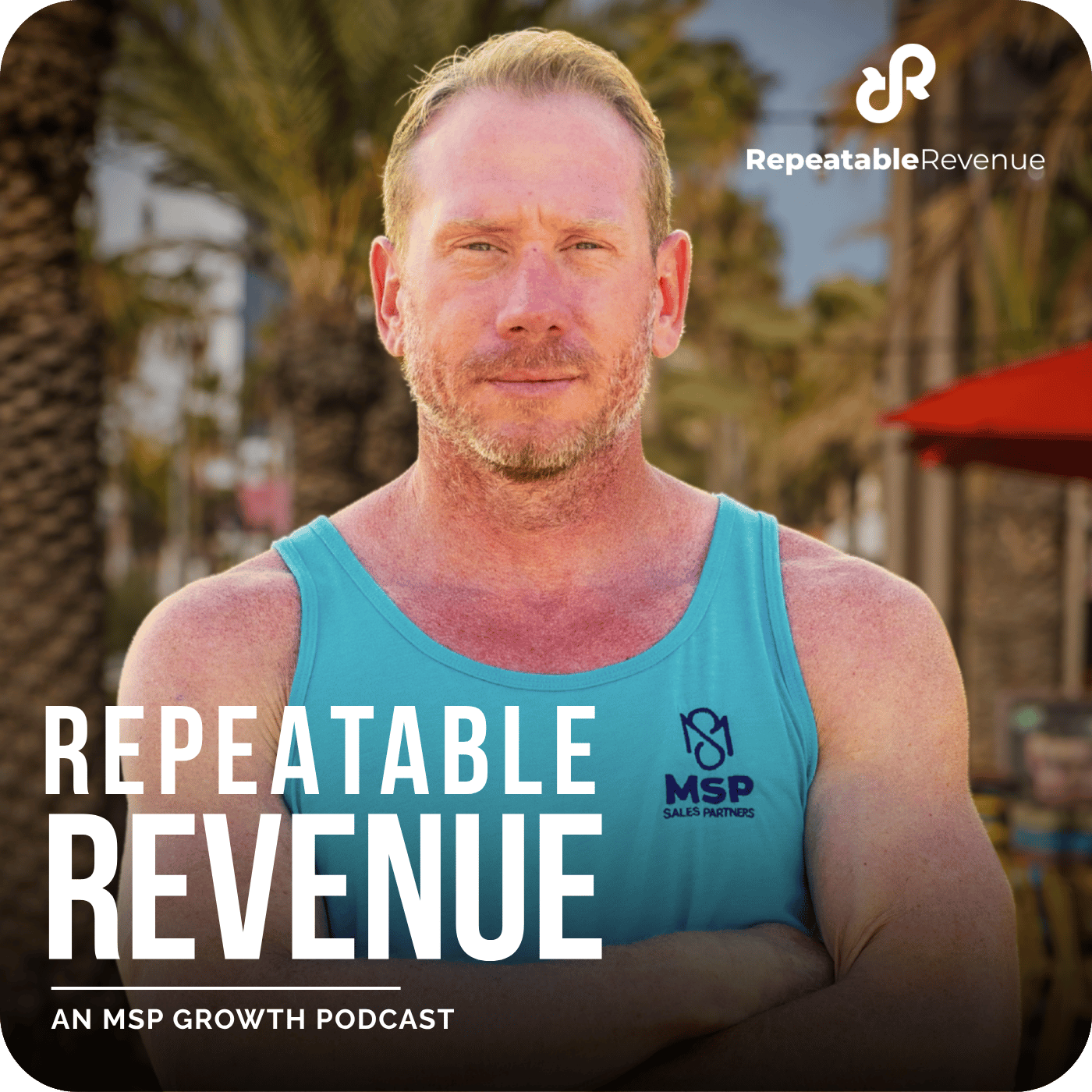
In this episode, Ray breaks down why your business is a system, and why the real leverage isn’t in setting better goals — it’s in identifying the single constraint that’s limiting throughput right now.
If you’re planning for the next quarter or year and feel pulled in ten different directions, this episode will help you narrow your focus to the one problem that actually matters.
This is for founders, operators, and sales leaders who want disciplined growth — not scattered effort.
What You’ll Learn in This Episode:
- Why goal-setting often ignores the real bottleneck in your business
- How to identify the constraint that’s actually limiting growth
- Why solving multiple problems at once usually solves none of them
- How to decide between competing priorities (leads vs. conversion vs. delivery)
- The discipline required to put “all the wood behind one arrow”
Follow Ray on:
YouTube | LinkedIn | Facebook | Twitter | Instagram
==
This podcast is where Ray thinks through hard decisions — especially when the usual playbooks stop working.
If that approach resonates, that’s what you’ll find more of here.
New to the show? The “Start Here” playlist outlines what the podcast is about and how to approach it: https://player.captivate.fm/collection/a7577a6f-15da-4521-b214-35e4e47f320b
Transcript
As we think about year-end planning and how to set our goals—what the focus is for the next quarter or the next year—I think one of the most important things you can do is the exercise of understanding what the core problems in the business are, and what the single most important one is.
A lot of times, we set goals based on projects to be completed, or we set our goals and priorities based on the things that we want done. "I want more brand growth. I want more leads. I want smoother operations." So, we set the goals and the priorities for the upcoming quarter or year according to the things that we want.
I have a different outlook on this. I think your business is a system made up of a bunch of different components that need to be optimized individually and based on how they operate with one another. But it is just one big system. And in systems thinking, one of the core elements of an effective system is understanding the constraints of the system. Because the system is only capable of producing the output according to what the constraints allow. The constraints create the limitations within any particular system, including your business.
So instead of saying what you want, I think a better exercise is saying: "What are the constraints to this thing today? I want to grow my business. I want to scale it 3-to-5X. What is the thing—or what are all the things—that are keeping us from getting there?"
"We're not getting enough leads." "We're not getting talented enough people." "Our sales process isn't good." "Our delivery isn't running really smooth." "Our retention isn't phenomenal."
You can write down all the individual problems. And then, what I look for is the one that is the highest leverage, highest impact on the business. Because that is the one that I've got to solve right now. That is the bottleneck. That is where all of the throughput is going to change dramatically if you solve that one thing.
Once you understand the constraints, dialing it down to the one constraint is really important. Because even if you shift from being goal-based to problem-based and solving the bottlenecks, what tends to happen a lot of times is people get diluted in the effort.
"Well, shit, there are 27 problems in a business." There is no business that doesn't have a ton of problems. So you can't tackle them all. The number of constraints and bottlenecks that you can actually attack and truly fix in any meaningful way is always way smaller than you think it is. I would argue in the vast majority of businesses that are sub-eight figures, you're probably looking at one constraint at a time.
I will tell you, I just went through this exercise personally, which is why I'm sharing this. Identifying the one constraint is really fucking hard. Because when you get to a point where you've got the problems all listed out, they're all going to start to feel important. You may be able to X a few of them off, but spending enough time to really say, "That's the one; if we fix that one, we are going to move forward faster than any other single one on this piece of paper," that process is hard.
You will get this feeling of FOMO. You'll start thinking about, "But we could also... But we could do this... And if we just did three, we could probably do three." And you have this temptation to want to tackle more than you really can. You bite off more than you can chew, and because of that, you never actually solve any of them, let alone the one that's going to be the biggest impact.
My advice—and just using my own experience literally this morning of going through this exercise—is to list the problems. List the constraints that you've got in the business. And then take the time that is necessary to really filter through those things and understand which is the most valuable one to solve.
I'll give you an example. When I was looking at my own list, one of the challenges is growth within the brand is not at the rate that I want it to be. Okay, well that's one. As a result, demand from brand growth isn't necessarily happening. Now, we're getting most of our business elsewhere, so it's not a huge issue, but it's a priority. It's a problem for us right now.
Another problem within the business is just because we've been hyper-focused on product and delivery and making sure that the thing that we're selling is really optimized, I've intentionally allowed our sales process to be suboptimal. It's not nearly as optimized ironically, because I'm a sales guy, as I would like it to be or as I'm capable of making it. And I've known that. But that hasn't been our core focus because the problem, the constraint up to this point, has been supply. It's been making sure that our product delivery or service delivery can be grown sufficiently and maintain the quality that I want to maintain.
So that's been our focus. And because of that, some of these other elements on the growth side of the business haven't been as good as I want them to be. Now, I'm still actually going to continue to focus on the product side of things going into next year. But let's just say I had that fully dialed in. That was no longer a constraint. And I was looking at brand/lead growth versus conversion. Look at those two things and you go: "Well, shit. If conversion isn't good, if your sales process isn't good, does it really make sense to fix leads and brand growth first?"
No. Because let's say you fix it. Let's say you 10X your brand growth and 10X your leads as a result of that brand growth. Well, if your sales process is still leaking shit all over the place, well then that's wasted effort. So in that case, I would look at that part of the system and I would say, "Well, it only makes sense to solve that constraint—which is the sales process—before we solve the brand and the lead growth constraint."
It takes some time to walk through that. My main point for me on this is: stop thinking about the goals and project and priority-oriented ways of looking at the business. Start looking at the constraints within the business. And make a really disciplined effort to hone in on the one that is going to have the greatest impact. Then put all of the wood behind that arrow to solve that one problem.
If you follow me on that, and that tracks, then go through and audit what all the constraints are within the business. Make a really disciplined effort to hone in on the one that is going to have the greatest impact.
I hope this helps. Adios.