full
Why Hot Referrals Die at the Proposal Stage
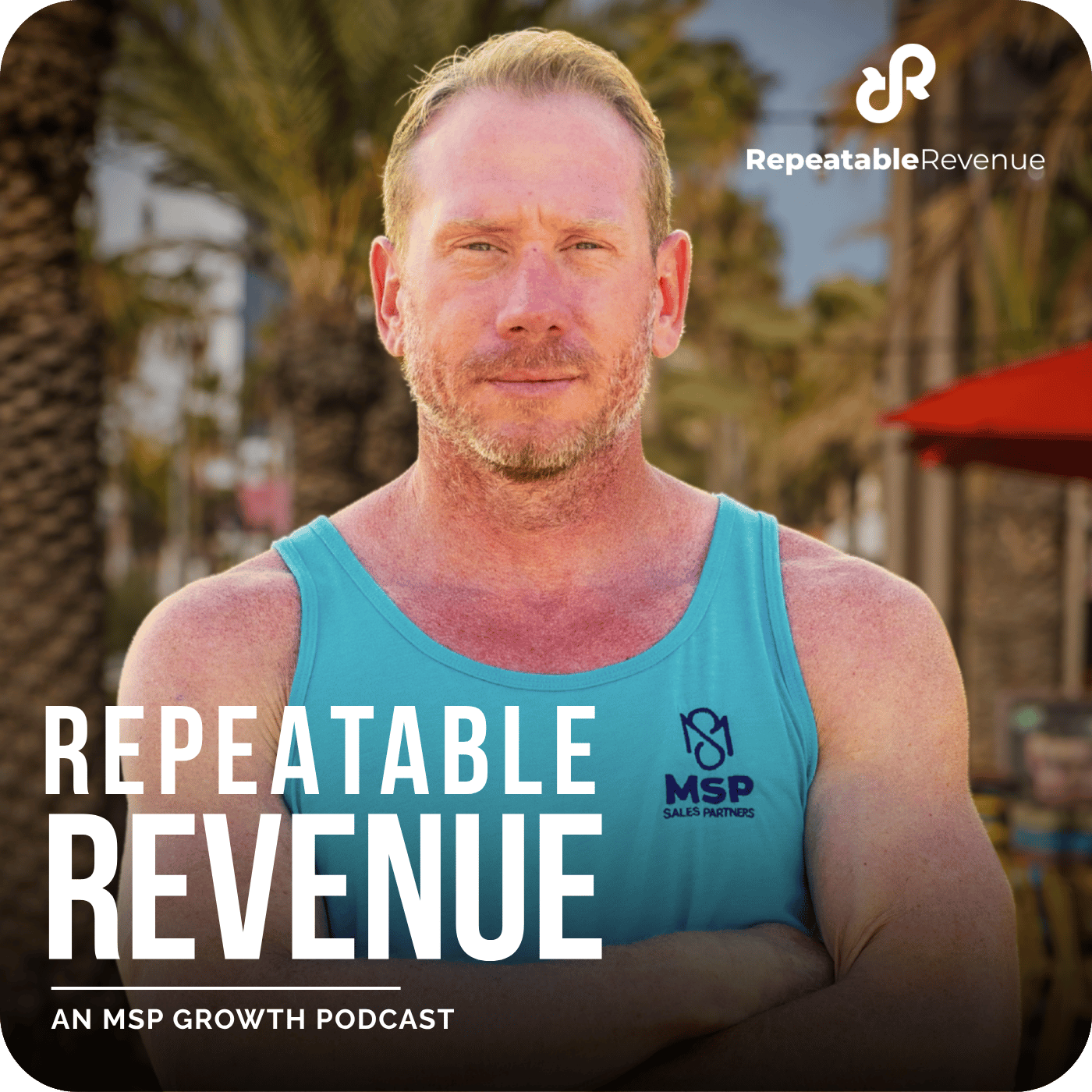
A referral calls in, they're in pain, they're ready to switch — so the qualifying call gets skipped, then the assessment, and three weeks later the deal dies at the proposal over a number nobody surfaced. In this episode Ray breaks down what combining and compressing sales stages actually costs, and argues it using the side of the business MSPs already get right: no help desk lets a tech skip triage because he can tell from someone's tone what's wrong, and no owner locks in a three-year price off what a prospect said in the first five minutes without counting users and servers first. He's candid about having been the problem himself, flying by the seat of his pants through a PE-backed turnaround while his COO pushed back. This is for MSP owners who want a forecastable system instead of a run of individual judgment calls.
What You'll Learn in This Episode:
- Why the qualifying call is the stage most often skipped — and what gets missed when it is
- How a single exception starts a cascade of judgment calls that costs deals months later
- Why the same owner who enforces triage on the tech side abandons process on the sales side
- What the assessment does for a three-year agreement that a discovery call can't
- Why judgment calls vary by what the rep ate for breakfast — and why that argues for systems
- How to remove a step properly: adjust at the system level, not deal by deal
//
Welcome to The Ray J. Green Show, your destination for tips on sales, strategy, and self-mastery from an operator, not a guru.
About Ray:
→ Former Managing Director of National Small & Midsize Business at the U.S. Chamber of Commerce, where he doubled revenue per sale in fundraising, led the first increase in SMB membership, co-built a national Mid-Market sales channel, and more.
→ Former CEO operator for several investor groups where he led turnarounds of recently acquired small businesses.
→ Current founder of MSP Sales Partners, where we currently help IT companies scale sales: www.MSPSalesPartners.com
→ Current Sales & Sales Management Expert in Residence at the world’s largest IT business mastermind.
→ Current Managing Partner of Repeatable Revenue Ventures, where we scale B2B companies we have equity in: www.RayJGreen.com
//
Follow Ray on:
Transcript
One of the most common mistakes I see MSPs make in the sales process, that costs them deals later on, is combining and skipping and compressing stages in their sales cycle.
Let me tell you what I mean. Say you've got a 10-minute qualifying call, then you've got a discovery call, then you've got your assessment, then you've got your proposal, and then you do your follow-up and close.
Somebody calls in and they're a referral. Hot to trot. They're ready to buy, or they're in deep pain. You can hear it. They're ready to go. And you're like, you know what? Do I really need to do a qualifying call? Let me skip this.
And you get to talking to them, so you turn it into a discovery call. They can't stand their MSP provider. They're ready to make a switch. They've got a problem that we can fix right now. Why don't we just fast forward this process, close the deal? There's no sense going through these unnecessary steps.
I will tell you, it's something that I see all the time. And at that stage in particular, by the way — it's like the qualifying call and the discovery call. It's like, we don't need the qualifying call. Well, we know that they're qualified. Not recognizing there's other stuff that happens in the qualifying process.
You move forward in the deal, you find out later it's not going to work out. You do the break-fix thing and they don't want to switch. Or they get to the very, very end and they're like, oh my god, I had no idea how much money that was. Or you get to the very, very end and they're like, you know what? We're just going to stay with the terrible provider that we have today. Thanks for your time. And you don't appreciate all the expertise that you probably offered along the way. And you lose the deal.
I debate this with MSP owners a lot, because when you skip steps and you skip stages and you compress stages and you compress the process, what you're doing is you're disregarding the process.
Listen, for years of my life I was the typical sales guy, just flying by the seat of my pants. My COO — I was running this company [COMPANY NAME], we were doing a turnaround for a PE firm — my COO was like, Ray, process. We've got to stick on process. We need this. And I'm like, dude, we have bank payments to make. We're overleveraged. We've got to go. Just go, go, go, go, go. [Expletive] the process. Just keep selling.
Last five years or so, I've really started to understand and appreciate and respect and enforce the importance of process. Because as you scale sales teams, as you scale your business, as you try to get any kind of real repeatability, real forecastability — if that's a word — real sense of, hey, we need to do X to drive Y. I want to know what Y is. I want to know what we need to do. I want to know if we're on track to do it.
And if you want that kind of sales system — not, listen, you've got to go full-on blitz mode, it's a little bit of chaos like that — if you want control of the system, if you want to predict what's going to happen, if you want to know exactly what you need to do to get the outcomes that you actually want, if you want control of that, you've got to have a process. You've got to have a system.
Now, here's the thing. I'm preaching to the choir when I'm telling you this, because you already kind of know this. You do it on the other side of the business.
If somebody called in to your help desk and said, hey, Outlook's not working, I need to get it fixed — and the tech skips triage. Says, you know what, I can tell by the tone of their voice and what they've told me so far, I can just skip steps of the process. Does that play out? Of course not.
Why? Because that judgment call is the problem. The fact that at different times, different techs are going to make different judgment calls based on what they ate for breakfast that morning, how quickly they want to get home, and just their sense of personality. Right? You know that. That's why you've got steps built into the process. And you've got a scalable system that's interchangeable, that gives you some control, that gives you some insight, that gives you accountability, transparency, and everything else that comes with a good process and a good system.
So you know this, and on the tech side you wouldn't do it.
Another example of this is you would never sign a three-year deal with somebody based only on what they told you in the discovery call, or even in the proposal meeting. Right? Like, you would not put your quote and lock in a price and lock in an agreement for how much you are going to accept from a client without first doing some type of assessment where you go, hey listen, we've got to figure out how many users, how many servers, how many workstations, how many this, how many that. Like, I know you told me this, but the reality is often this.
And that is the same thing that happens in sales. They're going to tell you stuff on the initial call in the first five minutes — particularly if they're frustrated, or particularly if they're a referral and they're kind of skipping steps potentially in their buying process — and you're taking their word for it.
And the same thing that happens from a tech standpoint, or from a contract standpoint, or from any other standpoint in the business, is the same thing that happens with the sales process.
If you've got a well-defined process, I cannot emphasize to you how important it is to enforce it. One crack, one fissure, one well-you-know-we-don't-have-to-do-it-here is what starts this cascade, this waterfall of judgment calls that end up costing you a lot of money and a lot of time later. Because you're not getting the deals, you're wasting your time in follow-up, people don't follow up, it's blah blah blah blah.
If you've got the process in place, then I implore you: use it, enforce it. And if you find that steps, or parts of the steps, aren't necessary, then adjust the process. Adjust it at the system level. Don't adjust it on a case-by-case, fly-by-the-seat-of-your-pants level, like you wouldn't do that on the tech side.
And then of course, if you don't have a sales process, then you may want to give us a call — mspsalespartners.com — and check us out. But if you've got one, make sure you're sticking to it.
Hope it helps. Adios.